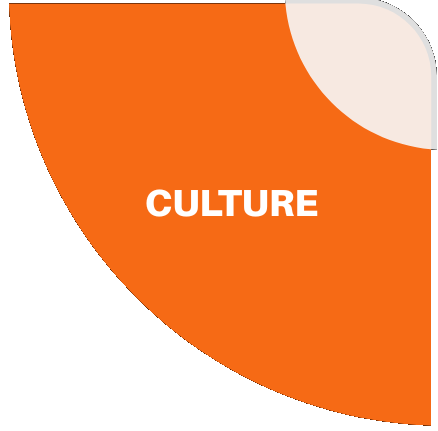
Culture Dimension
COLLABORATION | SOCIAL PROCESSESS | STORIES & SYMBOLS
The shared norms, relationships, and meaning-making patterns that shape how people experience work and how the organisation functions day-to-day.
Social Processes
- Team rituals: habitual and intentional interaction patterns that are repeated to create social capital and trust
- Behavioural norms: regularly reviewed collective agreements about what behaviours are desired to promote high-performance,
- Power and Politics: positive use of power, and intentional creation of healthy politics for the greater good
Stories and Symbols
- Narrative: origin or other stories that create identity, belonging, and help team members understand the organisation’s values, their roles, and the collective identity
- Meaning-making: the culture-creating process through which individuals and groups interpret and give significance to their experiences, actions, and the symbols within an organisation.
Collaboration
- Taking, seeking, and coordinating perspectives: an intentional process to assemble a wide enough set of perspectives on issues requiring a decision
- Interpersonal relationships: ways of working and communicating that, through disclosure and vulnerability, generate trust and, through creating and maintaining relationships, enable successful navigation of conflict
What is collective and What is intangible?
Relationships
Power and Politics
- They are power and forms of overt or covert domination a factor in the workplace?
- Are some people BIG and some people small?
- Are there in-groups and out-groups?
- How do decisions get made, officially and unofficially? Are these different?
- Who are the influencers?
- What are the games that people are playing?
- Insurgent-revolution-from-the-bottom?
- Sponsorship-alliance-building?
- Empire-building-resource-hoarding?
- Expertise-knowledge-withholding?
Behavioural norms
- What is acceptable and what is not?
- Can we argue and disagree strongly with each other, or do we all have to be nice, calm, even-voiced?
- Are you expected to fit in with the group or is it OK to be different?
- How different can you be?
Symbols, stories, myths
Leadership
(Shared) values
- Why are people showing up to work each day?
- Are they doing it for the same reasons?
- Is there coherence between why people are contributing their passions, skills, expertise and energy? Or is this only about money?
- What do people stand for?
- What will they accept?
- What will engage them?
- What will they walk away from?
Social processes
- Do we have rituals that help to define who we are with each other and in this place?
- Is the first agenda item always a check-in?
- Do we have a social contract that people use and is meaningful?
The components of culture interact with each other as much as they interact across the other 3 dimensions.
All too often, all three of Leadership's organisational outcomes are compromised by transactional and dehumanised relationships, abusive power-plays and dysfunctional office politics, undermining symbols, and cynical stories, and defensive or reactive behavioural norms, more attuned to covering up or hiding, for fear of punishment or other negative consequences.
Creating constructive social process must be done experientially, in intact teams, generally off-site (so people have enough psychological safety to experiment with relating to each other differently), AND, most importantly, directly applied to the actual work outcomes people are accountable to deliver (as opposed to a made-up workplace project). Additionally, teams need to be coached, challenged, and supported to apply new relational patterns in the workplace, in-situ.
It is almost a cliché to quote Drucker’s “culture eats strategy for breakfast”, however, the frequent repeating of this phrase does not in itself mean it isn't true.
A generative leadership culture, with healthy interpersonal norms and relationships will assist any team handle complex and uncertain environments better than rigid, codified ways of working, exhaustively defined standard operating procedures, and systems of work, or power-laden structures of accountabilities and authorities.
Click on any of the dimensions below to explore them in more detail.